Hospital Management System Implementation Checklist for Dubai Healthcare Providers
Hospital management systems can help health care providers effectively manage their patients and admin. Without systems in place, there can be increased paper work, less effective communication and difficulty of accessing important information.
A hospital management system (HMS) will allow healthcare organisations to manage their processes efficiently. By following this checklist you can easily select the right system for your hospital, medical centre or clinic.
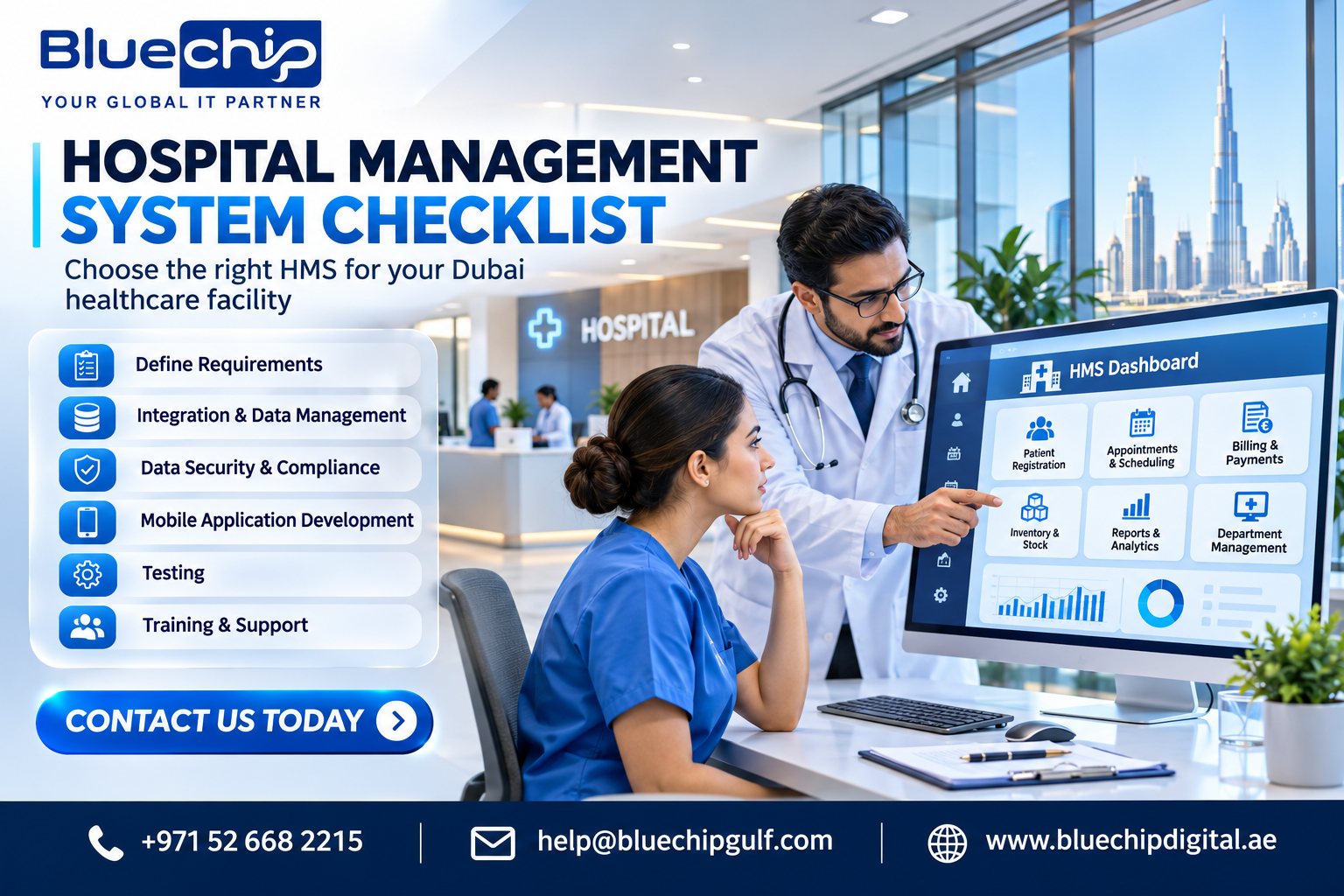
Determine your requirements.
Consider what processes you have in place within your healthcare facility. Do you have processes in place for patient registration, appointment booking, billing, stock management, staff administration and reporting?
Make a list of what features are essential to your healthcare facility. This can ensure that you have the correct system in place to manage your processes.
Integration and data management.
Healthcare facilities require accurate and accessible data. The hospital management system should allow the correct amount of data sharing between departments and reduce any duplication.
Consider how the new system will handle current data such as patient data, financial, stock and admin. Before moving across, ensure that all data is organised, duplicated data has been identified and you have a process in place to ensure data can be verified.
Consider how well the system will integrate with other existing applications and hardware. By planning this out, you can avoid causing too much disruption.
Data security & compliance.
Healthcare organisations deal with sensitive data so it is important to consider this when selecting a system.
Consider how the system will manage user roles, security, login, back up, audit trails and data recovery. Ensure that the system you choose complies with UAE healthcare laws and any data laws.
Ensure that you know who will have access to certain data and how any security issues will be managed. Speak to qualified compliance experts to ensure you understand what requirements you need to meet.
Mobile Application Development.
Mobile applications can help make the services you have chosen easier to use for you and your patients. If required by your healthcare facility, a mobile application could help with requesting appointments, reminders, service information and secure access to approved functions.
Selecting the right mobile application development company for your healthcare facility in Dubai is important. The application should be easy to use, reliable and secure.
Bluechip Digital can provide cross platform mobile application developments. We consider your business requirements, design, testing and support.
Testing.
Never implement a hospital management system without testing. Ensure that key processes are working such as patient registration, appointments, billing, stock updates, reporting and user access.
If there is integration, ensure that data is being passed between the systems. Fix any issues you find and have a plan in place for any unforeseen issues.
Ensure that the right people from the relevant departments are involved in testing.
Training & support.
It is important to train your staff to ensure they know how to use the system. Provide training for your admin, finance, healthcare professionals and management.
Provide user manuals and a process for raising technical issues. Regular maintenance, updates, reviews and the correct technical support can ensure your system remains reliable.
Why choose Bluechip Digital?
Having the right technology partner can make creating your healthcare software easier. We can provide hospital management ERP and mobile application developments based on your business requirements.
If you need your departments to work together more effectively, improve processes or have a mobile application, careful planning is key.
Get your healthcare processes up to date in Dubai. Contact us at Bluechip Digital.
Find out more and book a consultation.
FAQ
FAQ 1: What should hospitals consider for their Hospital Management System?
Before selecting or configuring your software you will need to consider your process for patient registration, appointments, billing processes, pharmacy, lab, stock taking, reporting, user roles, integration, data migration, uptime, security, audit, training and support. Dubai providers will also need to ensure that they are meeting any DHA and UAE health data requirements.
FAQ 2: How long does hospital ERP take to implement?
Time to implement will vary significantly depending on the size of the hospital, number of modules, integration, quality of legacy data, customization, testing, training and regulatory requirements. It is best to manage the implementation in stages to help minimize any risk. Your vendor should be able to provide a roadmap with key milestones once they have completed discovery.
FAQ 3: Which departments can be integrated with Hospital Management Systems?
Depending on which departments you have within your hospital you may want to integrate Registration, Appointments, Clinical, Billing, Insurance, Pharmacy, Lab, Radiology, Stock, Finance and Management Reporting. This will help you have a reliable source of information with minimal duplication.
FAQ 4: What should Dubai healthcare providers look for when buying Hospital Management Software?
Ensure that the software meets your requirements, has good integration, data migration capabilities, is secure, has user roles, audit trails, Uptime, Disaster Recovery, Reporting, Training and local support. Ensure that the software meets the required health information and regulatory requirements and ensure who is responsible for data protection and incidents.


